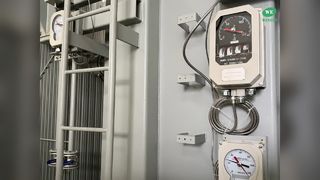
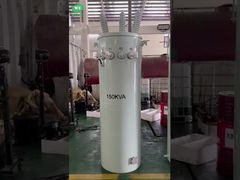
Brief: Discover how the 2500kVA Cast Coil Transformer operates in this detailed demonstration. This video provides an educational walkthrough of the dry-type epoxy resin construction, showcasing its resilience in harsh environments and explaining key technical specifications like the 22kV to 433V voltage transformation and compliance with AS60076 standards.
Related Product Features:
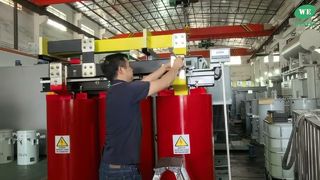
Vacuum-cast epoxy resin windings provide the highest level of protection against dust and humidity.
Rated for 2500kVA capacity with a primary voltage of 22000V Delta and secondary voltage of 433V Wye.
Features both self-cooled (AN) and forced-air (AF) cooling methods for operational flexibility.
Equipped with off-circuit tapping at ±2 x 2.5% for voltage adjustment capabilities.
Constructed with F-class insulation and designed for a 100K temperature rise.
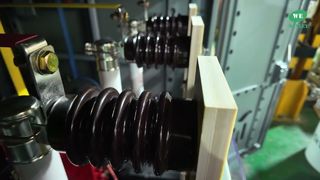
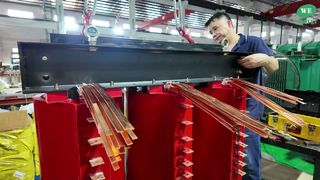
Available with aluminum or copper windings and terminal bus stubs suitable for cables.
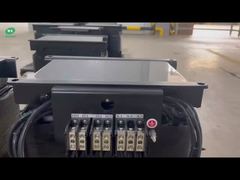
Includes features like anti-condensation heaters and anti-vibration mounts to reduce sound levels.
Offers lower installation costs and minimal maintenance compared to oil-filled transformers.
Faqs:
What environments are these cast coil transformers suitable for?
These transformers are ideal for harsh environments with airborne dust or high humidity, as the vacuum-cast epoxy resin windings provide superior protection against such conditions.
What cooling methods does this 2500kVA transformer support?
It supports both AN (self-cooled) and AF (forced-air) cooling methods, allowing for flexible operation and optional fan cooling for extra capacity during overloads.
Are these transformers compliant with international standards?
Yes, they are designed, built, and tested in accordance with high industry standards including NEMA, ANSI, DOE, AS60076, and IEEE as applicable.
What are the maintenance requirements for a dry-type epoxy resin transformer?
These transformers require low to no maintenance thanks to their solid cast resin construction, which is self-extinguishing and does not require liquid cooling systems.